


“PROfessors” Project. The first episode. Professor Joseph Stark

The SIUT Media Center has launched a new project called “PROfessors” with the aim of introducing the university’s professors. The first guest of our project was Professor Joseph Stark from the USA, the director of the SIUT Language Center. The university aims to train high-quality engineers with international qualifications, and to achieve this goal, they engage foreign and local professors and teachers of a global standard in the educational process.
Good afternoon, professor! Due to numerous requests from colleagues and students, we have decided to start a series of interviews, and you are our first interviewee!
Good afternoon! First of all, I thank you for inviting me to the “PROfessors” project, and I am pleased with the attention and recognition from colleagues and students!
Let's start our conversation, perhaps, with a traditional question: tell us about your childhood and educational background.
Allow me to introduce myself. I am Joseph Bane Stark, originally from the state of Nevada in the USA, born into a family of educators. I grew up in an educational environment, and perhaps that is why I loved this field more than others. I decided to pursue teaching while an undergraduate and I don’t regret that decision. After completing high school, I studied History and Religion at Hillsdale College in Michigan. I pursued higher education at the University of St. Thomas in Minnesota, where I studied English Literature. Finally, I completed my doctorate in Intercultural Studies at Biola University in California.
Could you briefly tell us about your professional activities?
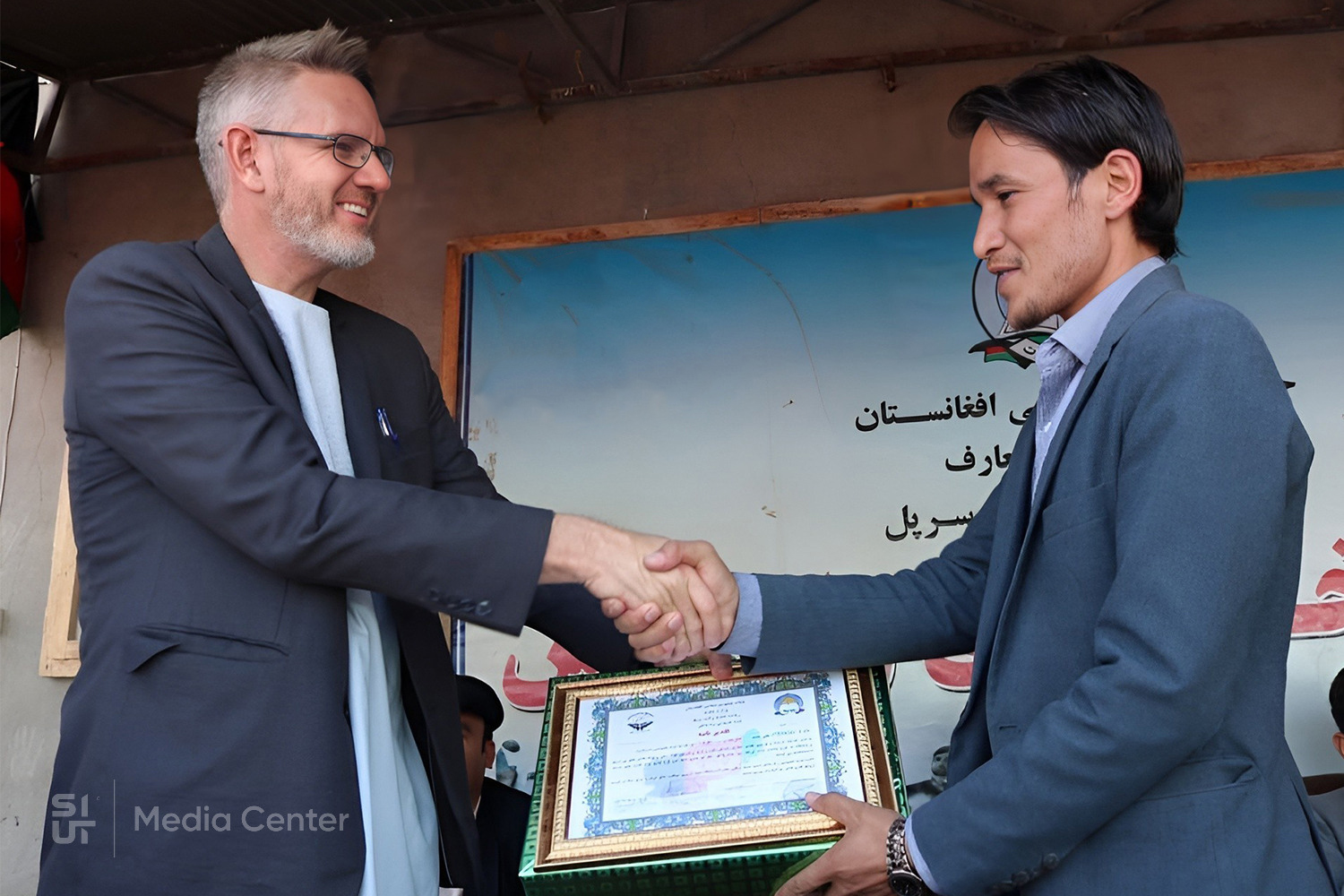
I have devoted my professional career to teaching and human development among different nationalities in various countries around the world. It would not be an exaggeration to say that I have dedicated the majority of my life to this endeavor. I began my first job in 1997. During those years, I worked for an educational training program that worked throughout the former Soviet Union. As it turned out, I was sent to work in Uzbekistan, and that is when I became interested in Uzbek traditions, customs, language, and culture. I worked and studied for a few years in the US and then moved back to Central Asia. From 2006-2021, I worked in Afghanistan and participated in numerous humanitarian projects. I contributed to the establishment of a private elementary and high school there, where children could be educated from preschool age to 12th grade. Additionally, I founded a language and culture center that instructed hundreds of students. This center specialized in training teachers for teaching English, Uzbek, Persian, Turkmen, and Pashto languages. Our center created dozens of new jobs and served numerous international clients. Specifically, I myself taught languages and culture at the center to contribute to the effective development of the country.
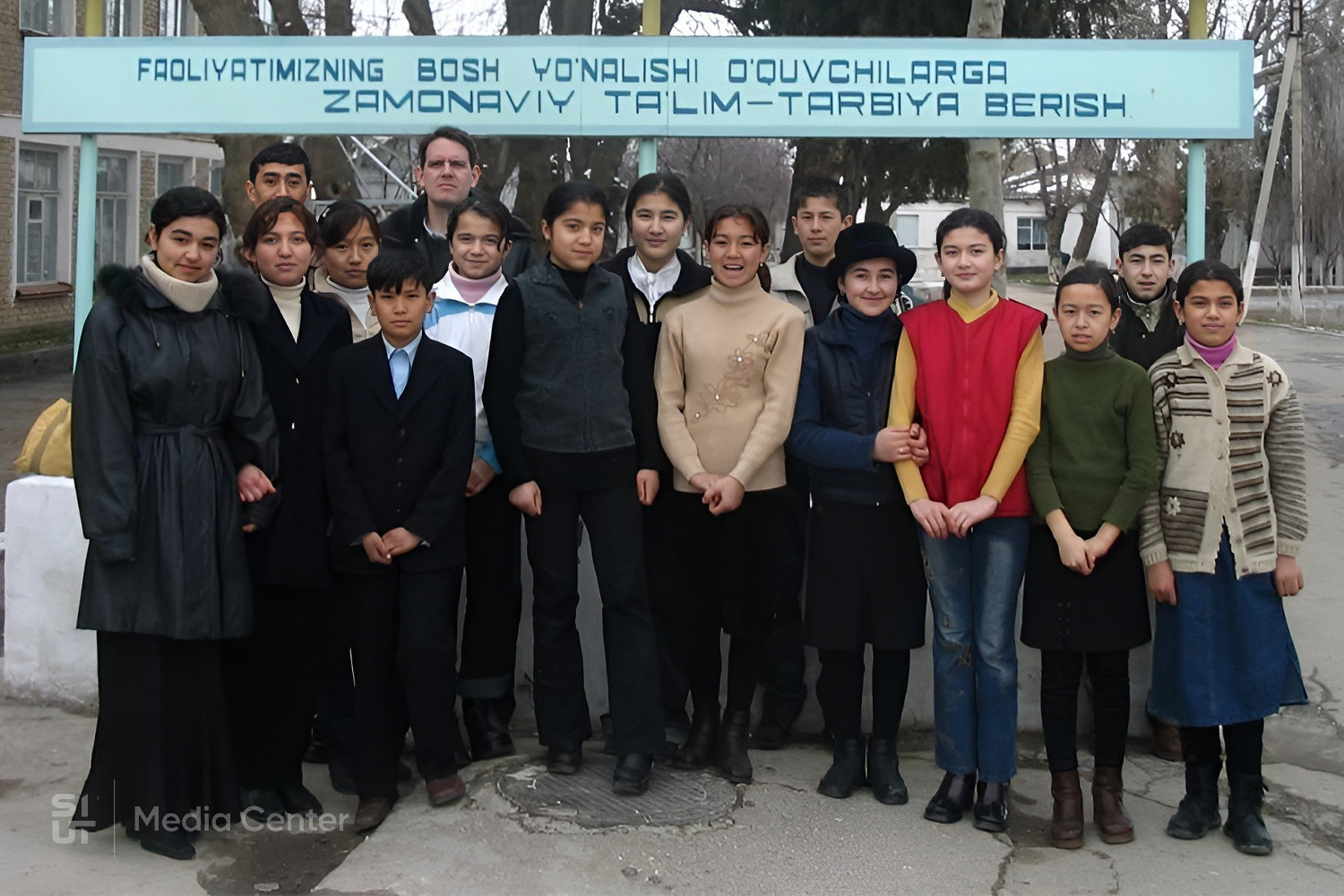
Knowledge of foreign languages is becoming a requirement of the time. We know that you are a linguist, a polyglot. Besides your native English, you are proficient in Persian, and even speak Uzbek fluently. Please share with us how you discovered the Uzbek language.
My parents exposed me to different cultures from a young age. We hosted people from Germany and South Korea, even, as my father was a teacher at a school that hosted foreign students. As a child, my father took me to visit other countries and multi-cultural communities and planted seeds for my future interest in languages and intercultural studies. Once I visited Uzbekistan, I fell in love with both learning languages and learning from the rich history of Central Asia. In recent years, I’ve particularly been fascinated by the great thinkers and poets of the past like Jalaluddin Balkhi and Alisher Navoi. I visited Uzbekistan twice. First, from 1997 to 1999, I taught students in Tashkent and Jizzakh. In 2004, I arrived in Uzbekistan again and spent two years intensively studying the Uzbek language at the Uzbekistan State World Languages University. While in Afghanistan, I also learned the Persian language. I am very pleased that I can speak these languages in Samarkand. Moreover, in order to improve skills in the Uzbek language, my family members and I participate in special courses organized by the Center for Uzbek Language and Culture at SIUT University. I hope that during my career, I will have the opportunity to study the unique Samarkand dialects of the Uzbek and Tajik languages and explore the rich cultural heritage of the ancient city.
What advice can you share that will help achieve success in your field? Based on your experience, from your personal observations.
I directly attribute my successes to patience and curiosity. It takes curiosity and an opening of oneself to learn a language and culture. The key to success is the ability to listen to others, to ask questions, and to be interested in others, particularly those from another language or culture. In my work in development, business, studies, and teaching, I have succeeded most when I take time, listen, and remain curious about others. This is also the pathway to love and love is the most powerful force in the world.
In your opinion, what personal qualities as a teacher can you identify in yourself?
As a professional educator, I believe that one of my key personal qualities is the desire to constantly learn and explore new aspects of knowledge. I strive to instill and enhance these qualities in my students. Methodologically, I am a firm believer in giving space to process and think in the classroom. Just as in life, when we encounter a problem and must find a solution, we learn with energy and joy. I also try to pass on the passion I feel for learning to my student. I invest all my energy and efforts into this teaching style, and it is gratifying to see the results: students demonstrate creativity, enthusiasm, and interest even when tackling complex tasks.
Tell us how is life in Samarkand for you? What are your impressions of working at the university?
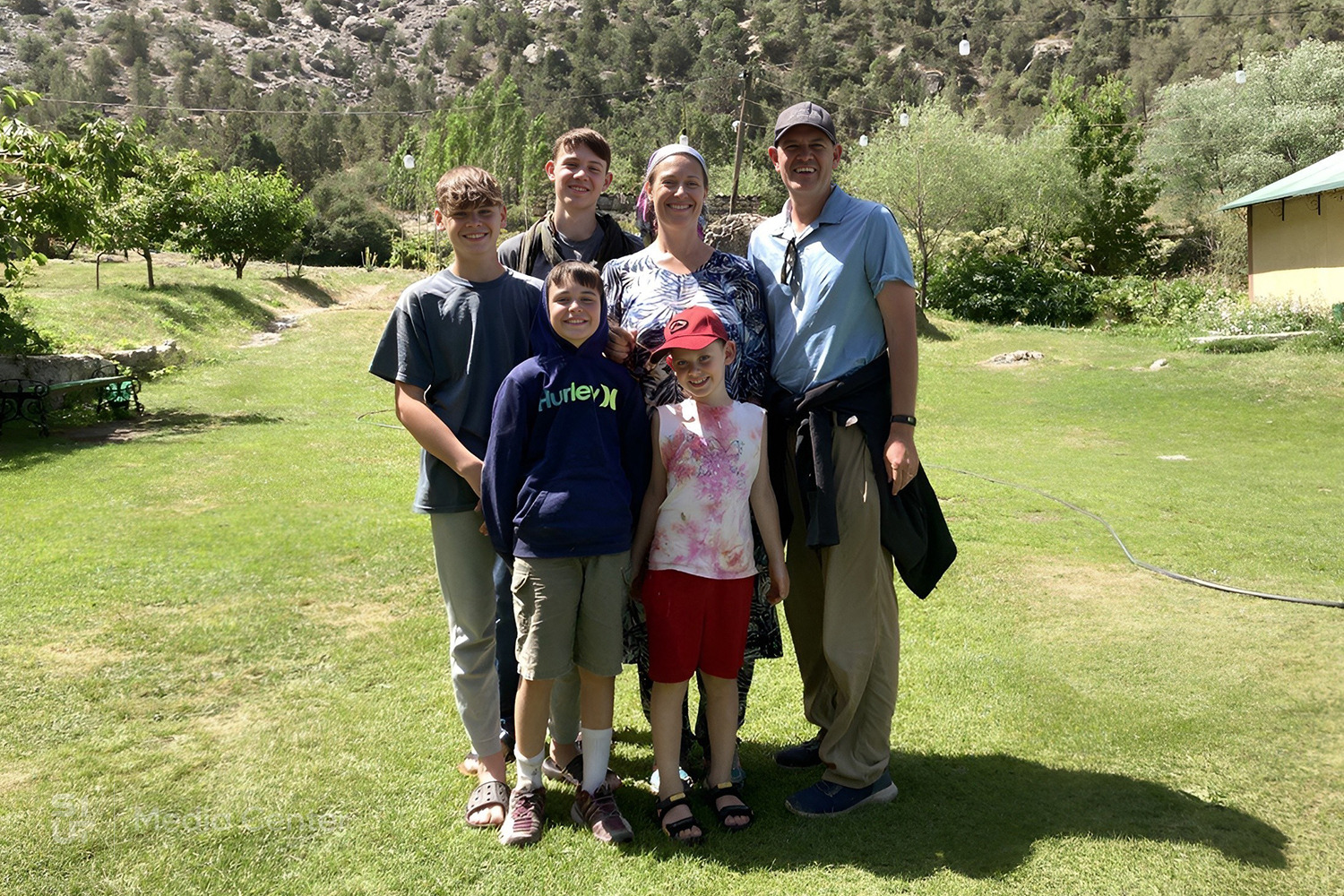
Life in Samarkand is very enjoyable for me. I am amazed by the vibrant life in this city. I arrived here with my family, and we make it a point to take evening strolls through the city. There are many places in the city where we can spend our time in an interesting way. I particularly appreciate the university boulevard and the unique historical monuments in the city. I really like our university, especially the cohesive team that includes professors from different parts of the world.
It wouldn’t be an exaggeration to say that you are an example for our students. Professor, what would you like to wish them?
While being in Uzbekistan, I have noticed how energetic, enthusiastic, and hopeful the youth here are. I see how students are focused on their studies and strive to find their unique place in the world, and I always try to support them. Unfortunately, the globalized world tends to deny the past. Therefore, I wish the youth of Uzbekistan to preserve the beauty of the past and integrate it intact into a bright future.
Thank you, Professor, for the sincere and substantive conversation! We wish you success in your work!


