


Cooperation with schools — the foundation of the future

In recent years, Uzbekistan has been undergoing significant transformations in the field of education, particularly in the organization of schools. Notably, higher education institutions are actively participating in this process. The effectiveness of the ongoing reforms and changes in education revolves around the organization of school education, aimed at preparing the workforce for the new generation.
The SIUT is committed to contributing to the improvement and enhancement of the quality of education in schools in Samarkand city and the Samarkand region. The university has identified effective collaboration with schools and support for their development as one of its top priorities.
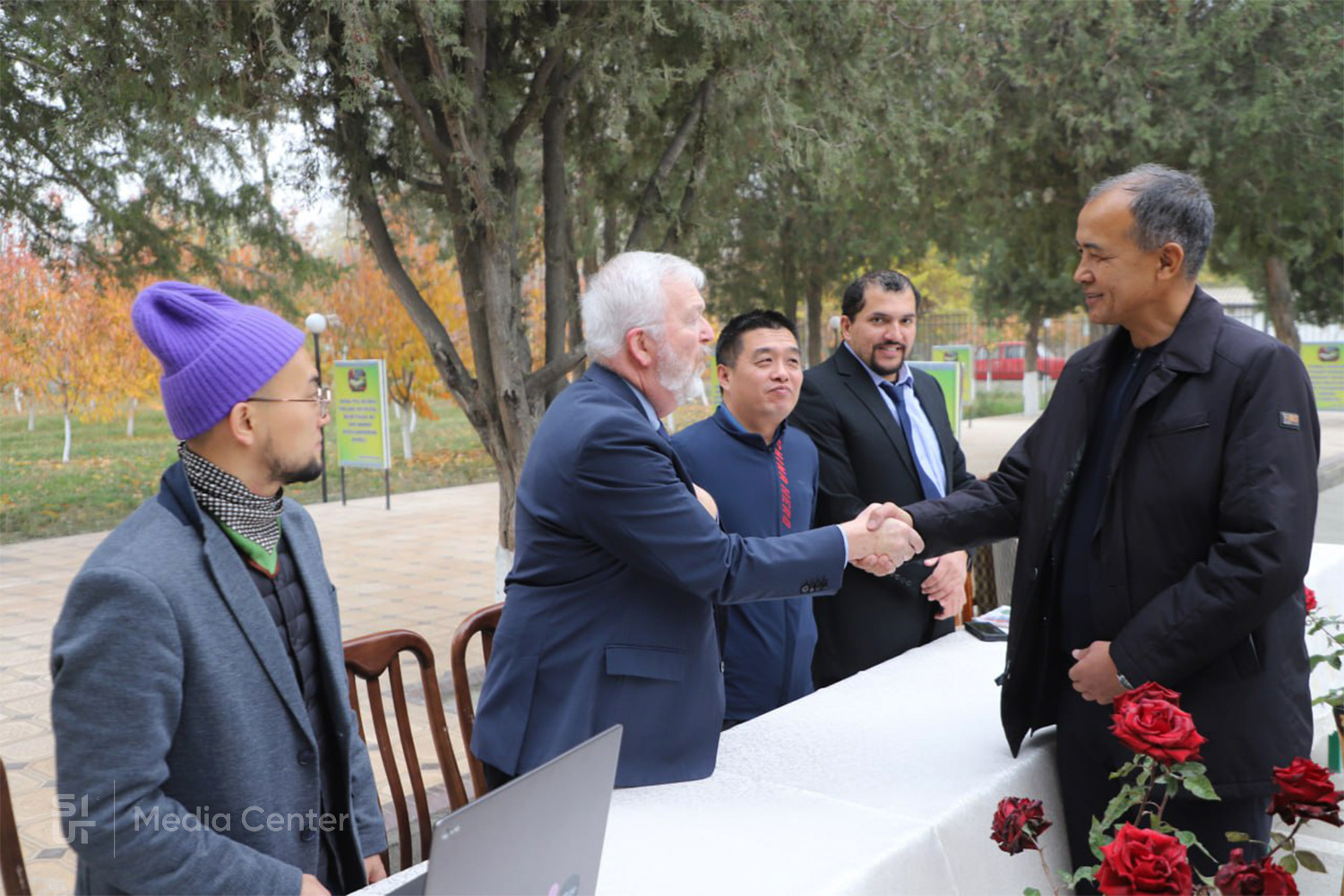
On November 18th of this year, a meeting took place at Secondary School No. 36 in the Jambai district of the Samarkand region, bringing together a group of foreign professors and lecturers from SIUT with the school’s students and staff. The district administration also participated in the meeting. In his welcoming speech, the district governor, Kayum Sobirov, highlighted the value of science as a precious heritage for all humanity, emphasizing the significant attention it receives in the country. Such meetings undoubtedly motivate students.
SIUT Vice-Rector Anvar Sayfullaev shared future plans with the audience, emphasizing the importance of international standards in the educational process. The successful integration of Uzbekistan into the global economy necessitates the preparation of a new generation of professionals equipped with advanced engineering knowledge, creative thinking, and skills in developing and implementing innovative technologies. The solution to this complex task lies in a radical restructuring of the existing system for training engineering personnel based on international standards of technical education.
During the meeting, students actively posed questions of interest, which were answered by foreign professors and lecturers from the university, including Ron Wiley (USA), Mohammed Kaabar (Palestine), Younghun Jung (South Korea), and Wang Xiaohui (China). The opportunity for dual-degree programs at the Korean Institute of Technology and Culture and the Chinese Institute of Electric Power sparked particular interest among the students.
“Building the future is impossible without science and technology. Today, we see how a favorable environment for industrial development is being created in the Central Asian region, especially in Uzbekistan”, - says Prof. M. Kaabar.
As a result of the meeting, an agreement was reached to sign a memorandum of cooperation with the aim of providing educational and methodological support from the university to the teachers and students of this school.


